
Demand generation involves marketing tools and is the process of attracting, nurturing, and converting potential customers with the aid of software tools and tools, which are designed to automatize the process of marketing.
It helps businesses:
- Capture leads efficiently
- Engage prospects consistently
- Improve conversion rates
- Build a predictable sales pipeline
Modern B2B marketing has changed significantly. There is no longer one interaction between buyers and decisions. They study, shop around, read materials and interact through various touchpoints before acting.
Companies that implement structured marketing automation for demand generation strategies are able to build more predictable pipelines and improve conversion efficiency over time.
Due to this change, the companies require a system capable of handling such interactions in a regular manner. It is no longer sufficient to use manual processes.
Marketing automation can address this issue by providing structured processes to capture, nurture and make follow-ups of leads automatically.
Research conducted by Oracle indicates that qualified leads boost by 451 percent and sales productivity grows by 14.5 percent among the companies that employ marketing automation.
In practice, it is obvious that:
From real-world execution, one thing is clear:
Demand is not generated by automation. It helps in controlling and transforming demand in a better way.
This manual describes how marketing automation can be used appropriately to create a demand generation system that is scalable.
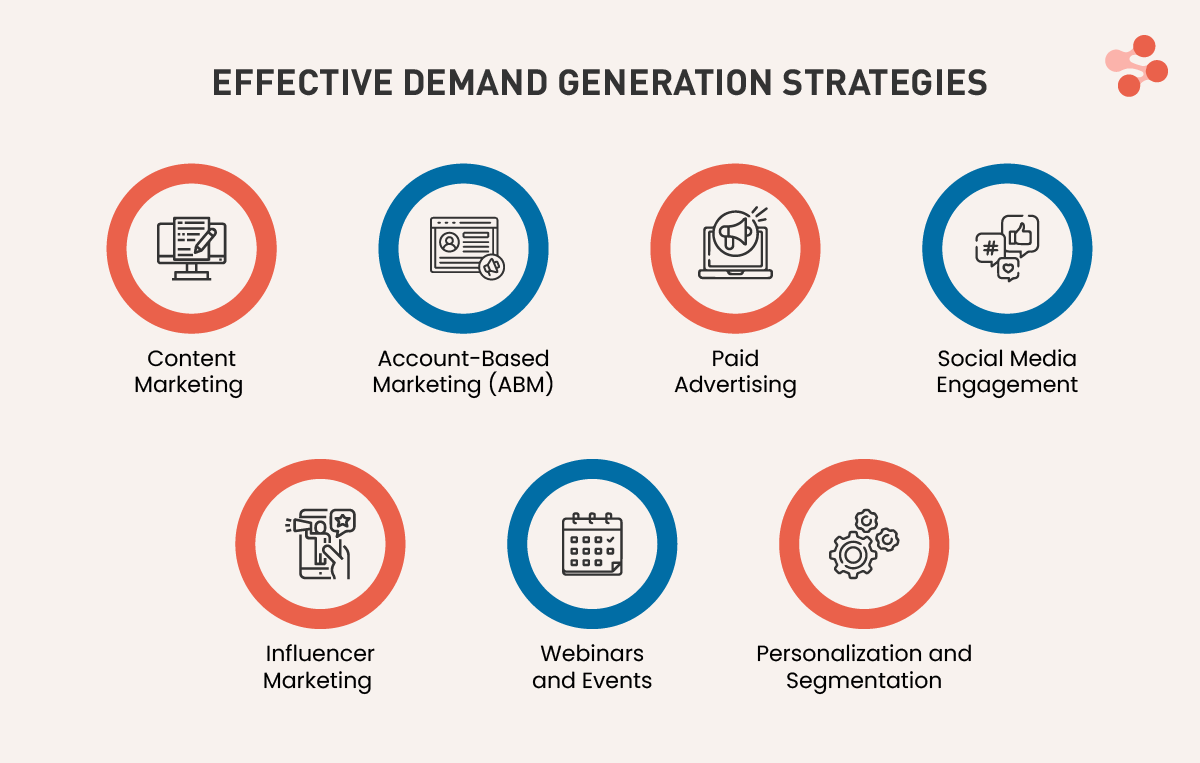
What is Demand Generation?
Demand generation is a long term approach that is aimed at creating awareness, building trust and creating interest with a customer prior to a customer being willing to purchase.
Demand generation is considered unlike lead generation, which collects contact information but aims at expanding its influence on the buyer journey at an early stage.
Quick Explanation
Demand generation creates interest and intent whereas lead generation grabs the interest.
| Stage | Activity | Goal |
| Awareness | Content, ads, social media | Visibility |
| Interest | Blogs, webinars, guides | Engagement |
| Consideration | Case studies, emails | Trust |
| Conversion | Demos, sales calls | Revenue |
| Retention | Follow-ups, upsell | Growth |
What is Marketing Automation?
Marketing automation refers to the application of software to automate marketing tasks (emails, lead nurturing, segmentation, and campaign tracking).
Simple Definition
Marketing automation is a framework that involves automatic management of marketing interactions as determined by the behavior of the user.
Real Example
Without automation:
• A user downloads a guide
• Follow-up is delayed or missed
With automation:
- Instant email is sent
- Engagement is tracked
- Next action is triggered automatically
This consistency is what improves results. In practical B2B environments, marketing automation is not just about sending emails. It acts as a central system that connects user behavior, content engagement, and sales follow-ups into one continuous process. This is especially important in demand generation, where timing and relevance directly impact conversion outcomes.
Why Marketing Automation is Critical for Demand Generation
There are several steps in the process of demand generation. All of them are linked together in one system through automation.
Key Benefits
| Benefit | Real Impact |
| Instant response | Higher engagement |
| Personalization | Better user experience |
| Scalability | Handles large lead volume |
| Efficiency | Saves time and effort |
| Better targeting | Improves lead quality |
According to Microsoft, organizations that align marketing and sales through structured demand generation strategies achieve better conversion rates and pipeline efficiency.
Expert Insight
From practical campaign execution:
The biggest gap in most companies is not lead generation—it is delayed follow-up and poor nurturing.
Automation solves this by ensuring every lead is engaged on time.
How Marketing Automation Drives Demand Generation
1. Lead Capture Becomes Reliable
Automation ensures:
- Every lead is captured
- Data is stored correctly
- CRM integration works seamlessly
2. Audience Segmentation Improves
You can segment users based on:
- Industry
- Job role
- Behavior
- Engagement level
This increases relevance and improves performance.
3. Lead Nurturing Becomes Continuous
Most leads are not ready to buy immediately.
Automation helps maintain engagement through:
- Email sequences
- Content sharing
- Retargeting campaigns
4. Lead Scoring Improves Conversion
Track user behavior such as:
- Email opens
- Link clicks
- Website visits
This helps identify high-intent prospects.
5. Campaign Optimization Becomes Data-Driven
Automation tools provide:
- Real-time analytics
- A/B testing
- Performance insights
6. Consistency Across the Buyer Journey (Added)
One of the biggest advantages of automation is consistency.
Every lead receives:
- Timely follow-ups
- Relevant content
- Structured communication
Without automation, this level of consistency is difficult to maintain, especially at scale.
Step-by-Step Strategy to Use Marketing Automation
Step 1: Define Your Ideal Customer Profile
Identify:
- Industry
- Company size
- Job roles
- Pain points
Without this clarity, automation will not deliver results.
Step 2: Create High-Value Content
Focus on content that provides value:
- Whitepapers
- Case studies
- Reports
- Blogs
- Webinars
Content builds trust and drives engagement.
Step 3: Build Lead Capture Systems
Use:
- Landing pages
- Forms
- Gated content
Keep forms simple to improve conversion rates.
Step 4: Create Automated Workflows
| Trigger | Action |
| Content download | Send welcome email |
| Email opened | Share related content |
| Link clicked | Send case study |
| Pricing page visit | Notify sales |
Step 5: Implement Lead Scoring
Assign scores based on:
- Engagement
- Behavior
- Intent
This helps prioritize leads.
Step 6: Align Marketing and Sales
Automation helps:
- Share lead insights
- Improve communication
- Increase conversion rates
Step 7: Measure and Optimize
Track:
- Conversion rates
- Engagement levels
- Lead quality
Then optimize continuously.
Where Most Companies Go Wrong (Added Section)
Even after investing in automation tools, many companies fail to see results. The issue is rarely the tool itself.
Common gaps include:
- No clear targeting or ICP definition
- Weak content strategy
- Delayed sales follow-up
- Over-reliance on automation without human intervention
In most real scenarios, improving process and alignment delivers better results than adding more tools.
Best Channels for Marketing Automation
Email Marketing
Email remains one of the most effective channels. in many B2B campaigns, email remains a core component of marketing automation for demand generation because it allows consistent and personalized communication at scale.
According to Forbes Advisor, email marketing delivers 36–42 ROI for every $1 spent.
Content Syndication
Expands reach through third-party platforms and generates leads.
Paid Advertising
Use automation for:
- • Retargeting
- • Audience segmentation
Website Personalization
Show content based on user behavior.
Social Media Automation
Schedule posts and track engagement efficiently.
Role of AI and LLMs in Marketing Automation
AI is transforming how marketing automation works.
It enables:
• Predictive analytics
• Content personalization
• Automated decision-making
🔹 Expert Insight
AI does not replace marketers—it enhances decision-making and improves efficiency.
Real Execution Example
In one campaign, we implemented:
• Automated email nurturing
• Lead scoring
• Behavior tracking
Results:
• Faster response times
• Higher engagement
• Improved conversion rates
🔹 Key Takeaway
Automation works best when combined with strong targeting and clear messaging.
How Arkentech Executes Demand Generation Using Automation (Added Section)
In execution-focused environments, marketing automation is used as part of a broader demand generation framework rather than a standalone solution.
Typical approach includes:
• Defining ICP and target account lists
• Distributing content through multiple channels (email, syndication, paid media)
• Setting up automated nurturing workflows
• Tracking engagement signals across touchpoints
• Prioritizing leads using scoring models
This ensures that demand is not only generated but also systematically converted into pipeline opportunities.
Future Trends
• AI-driven personalization
• Predictive analytics
• Omnichannel automation
• Real-time engagement
Conclusion
Marketing automation is not a time-saving solution only. It is concerning the development of a mechanism that creates and translates demand on a regular basis.
When applied properly, it assists the companies:
• Improve efficiency
• Increase engagement
• Generate better leads
• Build a predictable pipeline
When used correctly, marketing automation for demand generation becomes a long-term growth system rather than just a short-term campaign tool.
The real advantage comes not from using automation tools—but from using them strategically.
FAQs
Do small businesses need automation tools?
Not always in the early stage. However, with a growing number of lead volumes, one has to resort to automation as a means to be consistent.
When can you start seeing results from this approach?
There are some improvements that occur within a short period, although good pipeline results take a couple of months.
Does this require a high budget to implement?
Tools of different budgets are available. Its value is based rather on usage than on cost.
What usually goes wrong when companies try this?
Automation with no strategy and targeting.
Can this replace the need for a sales team?
No. It facilitates sales by making ready preparations and enhancing discussions.
Is technical expertise required to get started?
Most tools are easy to use. Strategy is more important than technical knowledge.
How should success be evaluated in this process?
Prioritise engagement, conversions and lead quality improvement.