
B2B marketing and advertising has come to have a growing number of focused on one question: How much lead does advertising generate?
That recognition has been lost. Marketing teams are expected to connect campaigns with revenue, demonstrate return on investment, and help sales teams generate more qualified prospects
But this pressure has also created a not unusual strategic problem.
Many B2B companies have moved too closely towards low-funnel approaches because they are easier to measure. Paid search, demo campaigns, retargeting, lead forms, evaluation pages, exit sequences, and conversion-focused touchdown pages can quickly produce visible results
The problem is that these processes essentially work separately when the demand is already there.
They capture customers who are already learning the solution. They now do not always create attention among customers who have not yet entered the market, influence future purchasing decisions, or make the organization a preferred seller before investing in competitive communication.
That’s where full-funnel B2B advertising becomes important.
Full-funnel ads now don’t mean a lot of spend for focus, even if they ignore revenue. It is a methodology that combines meditation, schooling, contemplation, reasoning, penance, and direction into a cohesive machine.
The real question is thus no longer:
Should B2B entrepreneurs opt for full-funnel or low-funnel ads?
The correct question is:
How can B2B marketing quickly create enough appeal and capture it effectively once consumers are equipped to act?
That differentiation goals may change the current demand for low-funnel strategies because of it, but they cannot share all the responsibility for increasing errand management.
What is full-funnel B2B marketing?
Full-funnel B2B marketing is a technique that combines advertising and marketing play throughout the customer journey rather than focusing on the simplest of individual steps. It combines demand arrival and demand capture to help prospects move from initial cognition to qualified lead sales.
Marketing at the top of the funnel focuses on generating attention, increasing symbol recognition, increasing disruptive popularity, and supporting consumers to find a category. Interest at the center of the funnel will educate buyers, help them perceive challenges, evaluate potential responses, and build trust in specific strategies. Bottom of the Funnel Advertising specializes in capturing and supporting existing appeals to buyers as they further drive inbound calls, prospects, and purchase decisions.
The goal isn’t really to create more leads. This is to create a non-stop journey from knowledge of the market to the right direction. By connecting content materials, campaigns, channels, and user reasoning at every stage, organizations can additionally create a complete and powerful B2B marketing methodology .
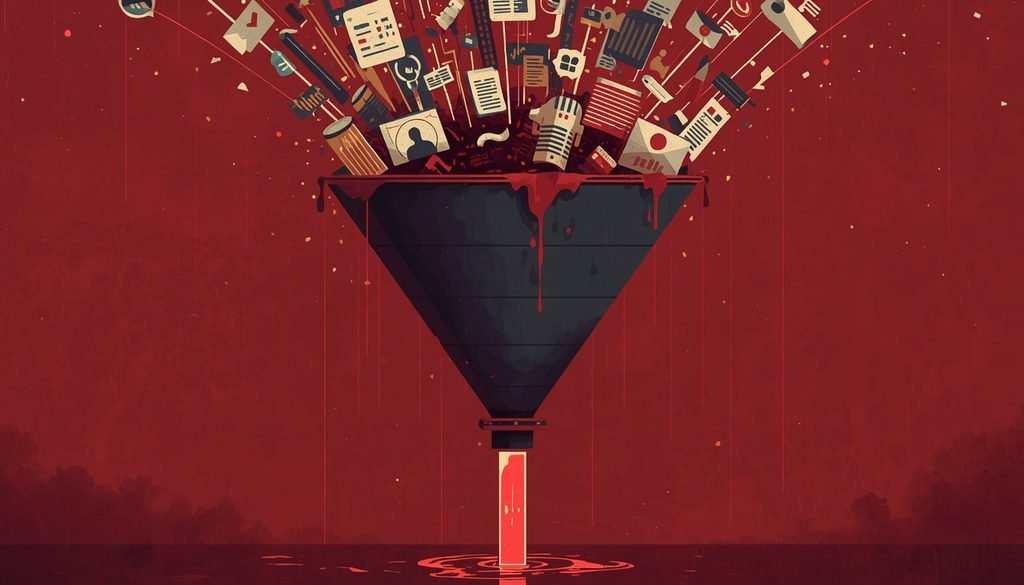
Full-Funnel Marketing vs. Lower-Funnel Marketing
The difference can be summarized simply:
| Full-Funnel B2B Marketing | Lower-Funnel Marketing |
|---|---|
| Creates and captures demand | Primarily captures existing demand |
| Builds awareness | Focuses on conversion |
| Educates future buyers | Targets active buyers |
| Influences consideration | Accelerates decisions |
| Supports long-term pipeline | Prioritizes near-term opportunities |
| Uses multiple funnel stages | Concentrates on high-intent stages |
| Builds brand preference | Captures commercial intent |
| Measures both leading and revenue metrics | Often emphasizes conversion metrics |
Neither approach is useless.
The problem occurs when a company expects lower-funnel marketing to perform every job that a full-funnel system is designed to perform.
Why Lower-Funnel Marketing Looks So Attractive
Lower-funnel marketing is attractive because it provides something every marketing leader wants:
visible results.
- A campaign can generate clicks.
- A landing page can generate form submissions.
- A paid search campaign can generate demo requests.
- A retargeting campaign can produce conversions.
These outcomes are relatively easy to connect to marketing activity.
That makes lower-funnel tactics particularly appealing when leadership is demanding immediate pipeline results. But measurable does not always mean complete. A buyer who searches for a software category, visits a pricing page, and requests a demo may already have spent weeks or months learning about the problem.
The final conversion event is visible. The earlier influence is not. This creates a measurement problem.
Marketing may give credit to the campaign that got the buyer even though earlier content, brand awareness, word-of-mouth social media, events or learning materials helped shape the buyers decision.
Modern B2B demand-generation research keeps showing this gap, between the to-track conversion and the full buyer journey.
Lower-Funnel Tactics Cannot Create Unlimited Demand
The biggest weakness of the low-funnel best approach is simple: it relies on buyers who are already impressed. Low-funnel campaigns are designed to capture existing conversations, but they can’t generate unlimited conversations on their own.
If potential customers don’t recognize your category, don’t recognize your solution, don’t grasp your symbol, or think they’ve got solvable problems, there may be very little demand for conversion campaigns to grasp .
Increasing the marketing budget does not automatically solve this problem. You may generate more impressions, clicks, and even leads, but eventually the available high-intent audience becomes limited.
This explains why a sustainable B2B marketing strategy cannot rely on buyers who are already searching for a solution. Companies must balance capturing demand, with creating future demand.
Lower-funnel marketing helps convert buyers who are ready today. Full-funnel marketing also helps create the awareness and interest that can generate the buyers of tomorrow.
The Difference Between Demand Creation and Demand Capture
This is one of the most important concepts in modern B2B marketing.
Demand Creation
Demand creation focuses on increasing the number of potential buyers who:
- Recognize a problem
- Understand why it matters
- Become familiar with the solution category
- Associate your brand with the problem
- Develop interest before actively searching
- Enter future buying cycles with stronger brand awareness
Demand creation can involve:
- Thought leadership
- Educational content
- Industry research
- Social content
- Webinars
- Podcasts
- Events
- Expert commentary
- Original research
- Category education
- Strategic brand campaigns
The goal is not necessarily an immediate form submission.
The goal is to influence future demand.
Demand Capture
Demand capture focuses on buyers who are already demonstrating commercial interest.
Common demand-capture activities include:
- Search marketing
- Product pages
- Comparison content
- Retargeting
- Demo pages
- Pricing pages
- Lead forms
- High-intent content
- Sales enablement
- Intent-based campaigns
- Conversion optimization
The objective is to turn existing interest into measurable action.
Why Both Matter
A strong full-funnel B2B strategy connects demand creation and demand capture into one system. Demand creation helps expand the market by building awareness educating potential buyers and creating interest. Demand capture focuses on converting buyers who are already showing interest.
If a business focuses only on creating demand, it may struggle to convert that interest into opportunities. On the other hand, if it focuses only on capturing demand, it may eventually run out of high-intent buyers to capture.
That is why the strongest strategy is not an either-or decision.
It is an integrated system:
Demand Creation → Buyer Awareness → Interest → Research → Demand Capture → Conversion → Pipeline
Why B2B Buyers Make Lower-Funnel Marketing More Complicated
B2B buying is often not an easy journey from advertising to purchase. A lot of people should be involved in the decision, each party can additionally research a kind of part of the problem.
For example:
- One person may discover your company.
- Another may evaluate the technology.
- Another may assess the financial impact.
- Another may compare vendors.
- Another may approve the final purchase.
This means marketing needs to influence more than a single lead. It needs to help build awareness, understanding, and confidence across the entire buying group.
A lower-funnel campaign may generate a form submission, from one individual. That does not necessarily mean the entire buying group is ready to make a decision. Full-funnel B2B marketing creates opportunities to influence different stakeholders at different stages of the buying journey helping the organization build broader confidence before the final purchase decision.
The Modern B2B Funnel Is Not Linear
The traditional funnel suggests that buyers move neatly through stages:
Awareness → Interest → Consideration → Decision → Purchase
Real B2B buying is rarely that simple.
A buyer may:
- Discover a company through social content
- Search for a problem
- Read several articles
- Talk to colleagues
- Ask an AI tool for recommendations
- Compare vendors
- Return to search
- Watch a webinar
- Visit a pricing page
- Leave the website
- Return several weeks later
- Engage with sales
The buyer may move backward and forward between stages.
That makes a rigid funnel less useful than a connected buyer-journey system.
Current B2B funnel research now focuses more on buyer signals non‑linear journeys, nurture and full‑funnel visibility of seeing lead capture as the whole demand‑generation process.
Why B2B Teams Overinvest in Lower-Funnel Tactics
There are several reasons.
1. Short-Term Revenue Pressure
Marketing leaders are often evaluated quarterly.
That creates pressure to prioritize activities that can demonstrate immediate results. Awareness may influence future pipeline. A demo campaign can produce a reportable number this month.
The second is easier to defend in a budget meeting.
2. Attribution Favors Conversion Events
Analytics platforms naturally favor measurable actions.
A form submission is easy to track.
A buyer who reads five articles talks about the brand, inside the company. Later searches for the company is much harder to link.
As a result marketing teams can unintentionally focus on what’s easiest to measure instead of what really influences the buying journey.
3. Lower-Funnel Campaigns Are Easier to Scale
Adding money to a paid campaign is straightforward.
Scaling thought leadership, category education and brand-building programs requires consistent strategy.
This creates a temptation to keep raising spending on the channels that already seem to work.
4. Lead Volume Can Create a False Sense of Progress
A marketing dashboard can look healthy while sales flow quality gets worse.
More:
- Leads
- Clicks
- Downloads
- MQLs
- Demo requests
do not automatically mean more revenue.
The more important question is:
What percentage of those activities becomes qualified pipeline and closed revenue?
The Pipeline Problem Behind Lower-Funnel-Only Marketing
A lower-funnel-only strategy can create a cycle:
More conversion spending → more captured demand → declining efficiency → higher acquisition costs → pressure for more leads → more conversion spending
The strategy becomes increasingly dependent on a limited pool of active buyers. At the same time, competitors may be investing in the buyers who are not yet ready to purchase.
Those future buyers may eventually enter the market already familiar with another brand. That creates a pipeline problem that may not appear immediately. The absence of demand creation today can become a shortage of qualified demand later.
Full-Funnel Marketing Creates Pipeline Resilience
A full-funnel strategy provides multiple opportunities to influence buyers.
It can:
- Build awareness before active research begins.
- Educate prospects about important problems.
- Establish authority within the category.
- Build brand familiarity.
- Develop engagement with target accounts.
- Capture high-intent searches.
- Nurture buyers who are not ready today.
- Support sales conversations.
- Improve conversion efficiency.
- Create future demand while capturing current demand.
This creates a more resilient pipeline system.
Instead of asking every campaign to generate immediate revenue, marketing can assign different roles to different stages.
What a Full-Funnel B2B Marketing Strategy Should Include
A strong full-funnel strategy does not mean producing random content for every stage.
It requires coordination.
Top of Funnel: Create Awareness
The top of the funnel should help the right audience recognize important problems and understand why those problems matter.
Useful content includes:
- Educational articles
- Industry trends
- Research
- Thought leadership
- Expert insights
- Social content
- Podcasts
- Webinars
- Original reports
The goal is to build attention and familiarity among the right audience.
Middle of Funnel: Build Consideration
Once buyers understand the problem, they need help evaluating possible approaches.
This stage can include:
- Solution guides
- Detailed educational content
- Comparison content
- Buying guides
- Webinars
- Research reports
- Industry frameworks
- Expert interviews
- Product education
The focus shifts from “Why does this matter?” to “What should we do about it?”
Bottom of Funnel: Capture Intent
At the lower end, buyers need information that supports action.
Important assets include:
- Product pages
- Demo pages
- Pricing information
- Comparison pages
- ROI content
- Case studies
- Implementation information
- Sales enablement assets
- Product documentation
The goal is to reduce uncertainty and make the next step easier.
Full-Funnel Marketing Requires Full-Funnel Content
One of the biggest mistakes is producing a large amount of content without assigning it a strategic purpose.
A content calendar should not simply ask:
“What should we publish this week?”
It should ask:
“Which stage of the buyer journey are we influencing?”
A balanced content system can look like this:
| Funnel Stage | Buyer Need | Content Objective | Primary Outcome |
|---|---|---|---|
| Awareness | Understand the problem | Educate | Reach and engagement |
| Interest | Explore the issue | Build authority | Qualified engagement |
| Consideration | Evaluate solutions | Help decision-making | Account engagement |
| Intent | Compare options | Reduce uncertainty | High-intent actions |
| Conversion | Take action | Remove friction | Opportunities |
| Expansion | Increase value | Support customers | Retention and expansion |
This creates a stronger connection between content and pipeline.
Why Content Alone Is Not Enough
Full-funnel marketing is not simply a content strategy.
Distribution matters just as much. A strong article that nobody sees cannot create much demand.
B2B marketers need to think about:
- Search
- Social
- Paid media
- Content syndication
- Communities
- Events
- Partnerships
- Sales distribution
- Retargeting
- Account-based campaigns
The goal is to make valuable content discoverable across the channels where target buyers spend time.
This becomes particularly important as B2B discovery increasingly occurs across multiple digital touchpoints and AI-assisted research environments.

The Role of AI in Full-Funnel B2B Marketing
AI is changing how marketers work at every stage of the funnel.
At the top of the funnel AI can find topics read market conversations sum up research and speed up content creation. In the middle AI can tailor content suggestions and spot patterns in how people engage.
At the bottom AI can rank accounts, spot buying signals aid sales teams. Suggest next steps. But AI should not turn full-funnel marketing into an automation-only exercise.
The strategic questions still require human judgment:
- Which audience matters?
- Which problem should the brand own?
- What differentiates the company?
- Which signals indicate meaningful intent?
- Which accounts deserve attention?
- Which content actually influences buying decisions?
The role of AI is increasingly to help marketing teams process more signals and act faster—not eliminate strategic thinking.
Buyer Intent Should Connect the Funnel
Intent data can help connect awareness and conversion.
For example, marketing can monitor signals related to:
- Topic engagement
- Search behavior
- Content consumption
- Account activity
- Website behavior
- Product interest
- Competitive research
- Repeat engagement
These signals become more useful when combined with a clear ideal customer profile.
Intent without context can create noise. The goal is not to respond to every signal.
The goal is to identify meaningful buying behavior from the right accounts.
Why ICP Matters in Full-Funnel Marketing
A full-funnel strategy does not mean marketing to everyone.
It means influencing the right market at multiple stages.
Your ideal customer profile should help determine:
- Which companies you target
- Which problems you address
- Which topics you own
- Which channels you prioritize
- Which accounts receive personalized campaigns
- Which signals matter
- Which leads should receive sales attention
Without a clear ICP, full-funnel marketing can become broad-funnel marketing.
And broad reach is not the same as useful reach.
Full-Funnel Marketing and ABM Can Work Together
Account-based marketing (ABM) and full-funnel marketing are not competing methods. Instead, they could be depicted together to create a more focused B2B marketing method. ABM allows companies to perceive and prioritize overpriced accounts, just as full-funnel ads provide a structured way to influence those accounts as long as the buyer is on the move .
Together, they create a progression:
Target Accounts → Awareness → Engagement → Intent → Sales Opportunity → Revenue
This approach allows marketing teams to look beyond individual lead activity and measure account-level engagement. That is particularly important in B2B because purchasing decisions often involve multiple stakeholders, each with different roles, concerns, and levels of influence.
Combining ABM with a full-funnel strategy allows companies to engage with appropriate loans, build focus on broader buy-in for the group, discover increasing motivation, and flow valuable loans closer to incrementally important revenue prospects and sales .
The Metrics That Actually Matter
Full-funnel marketing requires more than a lead-counting dashboard.
The measurement framework should connect marketing activity to pipeline outcomes.
Upper-Funnel Metrics
Useful metrics include:
- Target audience reach
- Brand search growth
- Relevant website traffic
- Content engagement
- Returning visitors
- Target-account engagement
- Share of voice
- Audience growth
Mid-Funnel Metrics
Consider:
- Engaged accounts
- Content consumption
- Webinar engagement
- Email engagement
- Repeat visits
- Account progression
- Intent signals
- Marketing-qualified accounts
Lower-Funnel Metrics
Track:
- Qualified opportunities
- Pipeline sourced
- Pipeline influenced
- Opportunity conversion
- Sales cycle length
- Win rate
- Customer acquisition cost
- Revenue
The important point is that these metrics should not exist independently.
They should form a connected measurement system.
A Better Full-Funnel B2B Marketing Framework
A practical framework can be built around six steps.
- Step 1: Define the Market: Define the Market: Identify the audience, ICP buying committee, business problems and category dynamics.
- Step 2: Create Demand: Develop content and campaigns that build awareness and establish authority before buyers become highly active.
- Step 3: Capture Demand: Capture Demand: Make it easy for active buyers to discover products, options, evaluate value and take action.
- Step 4: Nurture Demand: Not every buyer who engages today is ready to purchase today. Use relevant content and communication to maintain relationships with future buyers.
- Step 5: Activate Sales: Connect meaningful buying signals with sales activity. Sales should receive context, not simply a contact record.
- Step 6: Measure Pipeline: Measure Pipeline: Evaluate performance based on opportunities, pipeline contribution, conversion rates, revenue and customer acquisition efficiency.
This framework transforms the funnel from a collection of campaigns into a growth system.
Common Full-Funnel Marketing Mistakes
Mistake 1: Treating Awareness as the Final Goal
Awareness matters, but awareness without a path toward consideration and conversion is incomplete.
Mistake 2: Treating Lead Generation as Demand Generation
A form fill is one conversion event. It is not the demand‑generation process.
Mistake 3: Measuring Every Stage With the KPI
A top‑of‑funnel campaign should not be judged only by immediate opportunities. A bottom‑funnel campaign should not be judged by impressions. Different stages have jobs.
Mistake 4: Turning Every Content Asset Into a Lead Magnet
Not every buyer wants to give contact information, for educational content.
Ungated content can help discovery, search visibility, brand building and AI‑assisted research.
Mistake 5: Ignoring Distribution
Publishing content does not automatically create more demand.
Distribution needs to be part of the strategy.
Mistake 6: Disconnecting Marketing From Sales
Full-funnel marketing requires sales and marketing to agree on:
- ICP
- Target accounts
- Buying signals
- Opportunity definitions
- Lead acceptance
- Pipeline stages
- Revenue goals
Without alignment, the funnel becomes fragmented.
Full-Funnel vs. Lower-Funnel: Which Should B2B Companies Choose?
The answer is neither in isolation.
Lower-funnel marketing remains essential.Companies need to capture active demand.
They need campaigns that target people searching for things pages that are made to convert content about the product ways to reach people again tools for sales teams and clear directions on what to do next.
All of these things work better if the company has already made people know about the brand and, like it.
Full-funnel marketing therefore should not replace lower-funnel marketing. It should give lower-funnel marketing more demand to capture.
That is the strategic distinction.

How to Balance Full-Funnel and Lower-Funnel Marketing
There is no universal percentage that works for every B2B company.
The appropriate balance depends on:
- Market maturity
- Brand awareness
- Sales-cycle length
- Average contract value
- Competitive intensity
- Existing pipeline
- Customer acquisition cost
- Growth targets
- Category demand
- Available marketing resources
A company entering a new category may need significant investment in awareness and education.
A well-known company with strong existing demand may be able to emphasize conversion more heavily.
How to Know If Your Strategy Is Too Lower-Funnel Focused
Look for these warning signs:
- Paid acquisition costs are increasing.
- Lead volume is growing but pipeline is flat.
- Sales rejects a large percentage of MQLs.
- Organic brand searches are weak.
- Buyers know competitors better than they know your company.
- Marketing relies heavily on demo requests.
- Content is focused almost entirely on product keywords.
- Retargeting audiences are shrinking.
- Campaign performance depends heavily on discounts or aggressive offers.
- There is little engagement from future buyers.
- Marketing struggles to influence accounts before they enter the sales process.
These signals do not mean lower-funnel marketing is failing.
They may indicate that the organization is asking it to do too much.
How Full-Funnel Marketing Can Improve Lower-Funnel Performance
The value of full-funnel marketing is not only long-term awareness.
It can also improve conversion efficiency.
When buyers already understand:
- The problem
- The category
- The potential solution
- The brand
- The company’s point of view
the lower-funnel interaction can become easier.
The buyer may require less education. Sales may spend less time explaining basic concepts. Marketing can focus more on decision support. That can help improve the quality and efficiency of the pipeline.
The Future of B2B Demand Generation Is Not Funnel vs. Funnel
The debate about funnel and lower-funnel marketing can sometimes be misleading. The real challenge is not picking one approach over the other. Building a connected demand generation system that supports the entire buyer journey.
Modern B2B marketers need to answer three important questions:
- Are we creating enough future demand?
- Are we effectively capturing the demand that already exists?
- Can we connect both activities to pipeline and revenue?
If a business can only capture existing demand it may be efficient at generating conversions today. Struggle to create enough demand, for the future. On the hand if a business creates awareness and engagement but cannot convert that interest it may generate attention without producing meaningful pipeline.
The strongest strategy connects both activities into one continuous system
Final Takeaway
Lower-funnel tactics are useful because they help get buyers who are already showing interest.. They can’t create endless demand. When B2B companies rely much on bottom-funnel campaigns they end up fighting for the same small group of buyers who are looking to buy right now. They also miss out on the group of people who might come into the market later.
Full-funnel B2B marketing is a way to go. It helps make people aware build trust teach buyers help them think about options catch their interest help sales teams and finally bring in business and money.
The aim is not to pick between brand and results or between creating demand and capturing it or between making people aware and getting them to take action.
The goal is to connect them.
A strong B2B marketing engine creates future demand while converting today’s demand. That is why lower-funnel tactics should remain an important part of the strategy but they should never be expected to build the entire pipeline alone.
Frequently Asked Questions
1. What is full-funnel B2B marketing?
Full-funnel B2B marketing is a strategy that connects marketing activities across awareness, consideration, intent, conversion, and post-purchase stages. It combines demand creation with demand capture to support sustainable pipeline growth.
2. Why isn’t lower-funnel marketing enough for B2B companies?
Lower-funnel marketing primarily captures existing demand. It works best when buyers are already researching solutions. Without ongoing demand creation, companies can become increasingly dependent on a limited pool of active buyers.
3. Is full-funnel marketing better than performance marketing?
They serve different purposes. Performance marketing can be highly effective at capturing existing intent, while full-funnel marketing combines demand creation and demand capture. The strongest B2B strategies use both rather than treating them as alternatives.
4. What channels are used in full-funnel B2B marketing?
Common channels include SEO, thought leadership, social media, paid media, content marketing, webinars, events, email, content syndication, ABM, retargeting, search marketing, and sales enablement.
5. How do you measure full-funnel B2B marketing?
Measurement should connect stage-specific metrics with business outcomes. Useful metrics include target-account engagement, content engagement, qualified opportunities, pipeline sourced, pipeline influenced, conversion rates, win rates, sales-cycle length, customer acquisition cost, and revenue.