
Generating B2B leads is getting tougher because buyers are being very picky about the brands they want to deal with. Companies do not respond to every sales message they get. Before they even talk to a sales person B2B buyers do their homework on companies they compare what is there they read what other people have to say they look for information that can help them and they try to figure out if a company really gets what their business needs are.
This is where B2B email marketing still comes in handy.
Email is a way to build a relationship with potential customers because companies can talk to them directly without having to worry about how they show up in search results or paying for ads or dealing with social media rules. If you use email marketing in a way you can get new people interested help the people who are already interested get people who have not been in touch for a while to start again and get the people who are serious about buying to talk to a sales person.
Just sending out sales emails to a big list of people is not the same as having a good plan for getting B2B leads.
To get B2B leads through email marketing you need to have the right people to send emails to you need to say things that matter to them you need to have information about them you need to make the emails personal you need to group similar people together you need to follow up with them regularly and you need to know where they are in the process of deciding to buy something.

A company might have a lot of contacts. If those contacts are old not relevant or not grouped correctly sending them emails might not do much good. On the hand a smaller list of people who are really the right fit can be much more helpful and lead to more sales.
This guide will show you how companies can use email marketing to get B2B leads make the leads they get better help the people who are interested and make their sales team stronger.
It will also talk about how to build a list of email addresses how to group people together how to make emails personal how to use automation how to help people who’re interested how to use artificial intelligence to make email marketing better how to measure if your emails are working what mistakes to avoid and how to turn people who are engaged with your emails, into customers.
What is B2B lead generation via email marketing?
B2B lead generation capability through email advertising and marketing is a system of using targeted email campaigns to attract business customers, build relationships with decision-makers, and deliver qualified prospects to sales opportunities .
Typically, the organization starts with identifying the right target market. It can also be executives, department heads, purchasing teams, company owners, technology leaders, or other experts who influence purchasing choices .
Once the target audience is established, organizations can create email campaigns designed around the specific problems, interests, and range of adventure shopping .
For example, a software company targeting advertising audiences might send educational emails to prospects interested in automation to increase advertising effectiveness. The Cybersecurity Agency may send a Security Assessment Manual to companies that deal with cybersecurity-related content material.
The goal honestly is not to sell right away. The goal is to provide enough relevance and cost that prospects will sooner or later become more familiar with the business campaign and take meaningful action.
That action could be downloading a resource, joining a webinar, asking for advice, visiting a product page, or talking to a sales consultant.
Why Email Marketing Is Important for B2B Lead Generation
B2B retail choices are usually complex and involve more than one stakeholder. A prospect will not be ready to buy when they first know the company.
This creates significant opportunities for email advertising.
Instead of letting a dull prospect disappear after the first interaction, companies can keep the conversation going with them with relevant content and well-thought-out campaigns.
A properly designed email ad management technology strategy keeps your company in touch with prospects while building credibility on a regular basis .
Email can also help with certain levels of B2B revenue retention.
| Buyer Stage | Email Marketing Objective | Example Content |
|---|---|---|
| Awareness | Introduce the problem | Educational article |
| Interest | Build engagement | Industry report |
| Consideration | Demonstrate expertise | Case study |
| Evaluation | Support decision-making | Product comparison |
| Intent | Encourage action | Consultation offer |
| Nurturing | Maintain relationship | Personalized content |
| Re-engagement | Recover inactive leads | New offer or resource |
This makes email particularly useful for businesses with longer sales cycles.
B2B Email Marketing V/s Traditional Email Marketing
While the basic technology behind email advertising is comparable across industries, B2B campaigns require a unique approach than a typical consumer email campaign .
B2B buyers typically choose primarily based on business outcomes, including cost reduction, efficiency, productivity, scalability, risk management, revenue growth, or operational improvements
Process shopping can involve many people instead of one person.
For this reason, effective B2B email advertising and marketing should focus on business problems and measurable costs as opposed to relying heavily on advertising goals.
| B2C Email Marketing | B2B Email Marketing |
|---|---|
| Often targets individuals | Targets businesses and decision-makers |
| Shorter buying cycle | Often longer buying cycle |
| Emotional and promotional messaging | Value and problem-focused messaging |
| Individual purchase decision | Multiple stakeholders |
| Product-focused | Business-outcome focused |
| Frequent promotional campaigns | Education and nurturing are important |
Understanding this difference is essential for businesses that want to generate qualified B2B leads rather than simply increase email engagement.
How Email Marketing Generates B2B Leads
There are several linked layers in the email advertising lead generation process.
First, companies want to attract or discover the right prospects. Next, those opportunities should be fully segmented based on characteristics that include industry, organization length, business function, complementary or buy to platform .
After segmentation, companies can create usable campaigns designed to offer bonuses and encourage a specific action.
The final steps include nutrition, conditioning, intake tracking, and measurement.
This type of B2B lead era e mail advertising and marketing should not be treated as unmarried campaigns. This higher is understood as a continuous system that links advertising and marketing communications with sales management.
A typical process looks like this:
| Stage | What Happens |
|---|---|
| Audience research | Identify ideal companies and decision-makers |
| Lead acquisition | Attract prospects through content, forms, events, or other channels |
| Segmentation | Organize prospects into relevant groups |
| Campaign creation | Develop targeted email content |
| Personalization | Adapt messages to audience needs |
| Lead nurturing | Build relationships over time |
| Qualification | Identify sales-ready prospects |
| Sales handoff | Send qualified opportunities to sales |
| Measurement | Track performance and revenue impact |
Each stage influences the quality of the final result.
Start with the Right B2B Audience
The biggest mistake companies make when looking to generate B2B leads with email advertising is starting with an email campaign instead of a target market.
Before writing a subject line or creating an email template, businesses want to understand who they want to reach.
A strong B2B target market definition will take extra than approach headings.
For example, a company that sells software applications may target Chief Information Officers,, however, not every CIO may be an appropriate prospect. Company size, manufacturing infrastructure, company, geographic market, commercial company growth rate, and the current era can all have an impact on whether an account is a good suit.
Therefore, organizations should expand their ideal customer profiles long before launching large-scale campaigns.
Create an Ideal Customer Profile
The ideal customer profile, commonly referred to as ICP, describes the type of business most likely to benefit from a business service or product.
A strong ICP can keep advertising and marketing teams from wasting assets on customers who won’t become customers.
For B2B lead generation, an ICP might include:
| ICP Factor | Example |
|---|---|
| Industry | SaaS, FinTech, healthcare, manufacturing |
| Company size | 100–1,000 employees |
| Revenue | Mid-market or enterprise |
| Geography | North America, UK, Europe |
| Decision-maker | VP Marketing, CMO, CRO |
| Business challenge | Low-quality pipeline |
| Technology | CRM and marketing automation users |
| Buying trigger | Business expansion or new technology adoption |
Once the ICP is established, email campaigns can be designed around the needs of those organizations.
This makes messaging more relevant and improves the probability of attracting qualified B2B leads.
Build a High-Quality B2B Email List
A successful email campaign depends a lot on the size of your contact database.
While companies individually focus on collecting as many contacts as possible, a large database doesn’t necessarily result in more sales.
An effective B2B electronic mail routing time method prioritizes relevant and accurate contacts.
Key sources can include internet site papers, downloadable materials, webinars, company opportunities, e-newsletter subscriptions, content material campaigns, expert networks, referrals, and other legitimate business improvement games .
The information gathered should help companies understand whether a prospect fits the ICP.
For example, keeping the most effective name and email address may not provide enough records for effective segmentation. Additional business information can help create more relevant campaigns.
What Information Should a B2B Lead Database Include?
| Data Point | Why It Matters |
|---|---|
| Name | Enables personalization |
| Business email | Supports professional communication |
| Job title | Identifies decision-making role |
| Company | Enables account research |
| Industry | Supports segmentation |
| Company size | Helps identify ideal accounts |
| Location | Enables regional targeting |
| Content interests | Supports personalization |
| Engagement history | Identifies buying signals |
| Lead source | Measures campaign performance |
Data quality should be reviewed regularly because people change jobs, companies change priorities, and business information becomes outdated.
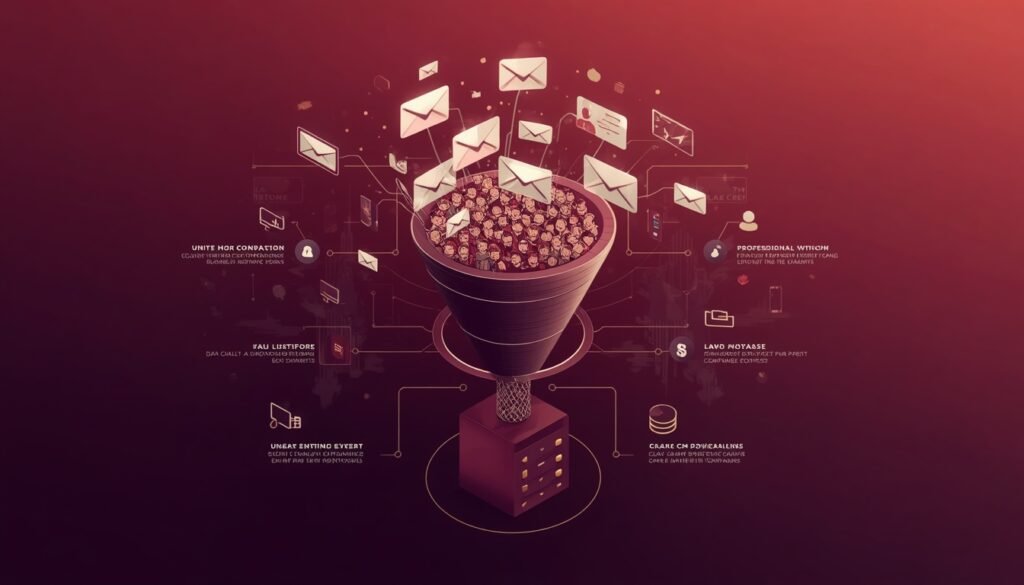
Focus on lead quality instead of email list size
A common myth is that larger email lists mechanically generate more leads.
A truly irrelevant database can hurt the performance of a marketing campaign.
Suppose a business has 50,000 contacts but at best a small percentage matches its target market. Another organization has 5,000 but disposable contacts, which closely matches its ICP.
A second business campaign can generate significantly more qualified prospects because its campaigns reach people who are much more likely to need an authentic campaign.
Therefore, B2B management services and internal marketing teams should prioritize data accuracy, market relevance, and high engagement.
The goal may not be to build a meaningful database.
The goal should be to build a proper database.
Segment Your Audience Before Sending Campaigns
Segmentation is one of the most important additions to powerful email advertising for B2B leads.
Sending the same email to every contact assumes that every prospect has the same desires. Certainly unique industries, organization sizes, job roles and purchasing areas require specific messages.
For example, a CEO may additionally care about revenue growth and business efficiency, while an advertising executive may be more interested in the overall performance of the campaign and leadership quality .
Segmenting contacts allows companies to create more applicable campaigns.
| Segmentation Method | Example |
|---|---|
| Industry | SaaS, FinTech, healthcare |
| Job role | CEO, CMO, sales director |
| Company size | SMB, mid-market, enterprise |
| Location | US, UK, Europe |
| Buyer stage | Awareness, consideration, decision |
| Engagement | Active, inactive, highly engaged |
| Content interest | AI, cybersecurity, automation |
| Lead source | Webinar, organic search, referral |
The more relevant the segment, the easier it becomes to create useful messaging.
Personalization can improve B2B email communication
Personalization is now no longer constrained to having the customer’s first name in the problem line.
Modern B2B email advertising and marketing strategies use records of a prospect’s organization, company, business mission, interactions, and interests to create multiple actionable interactions
For example, instead of sending:
“Our platform can help your commercial business grow.”
A more targeted message could explain how the platform can help SaaS businesses reduce lead leakage between advertising and marketing revenue.
The second message is extra specific because it links the solution to a recognized commercial company problem.
It can often be a reason for personality. Adding meaningless non-public facts can make email make synthetic sense instead of helpful.
Great personalization shows that the sender knows the prospect’s business.
Create Emails Around Buyer Problems
People rarely respond to emails simply because a company wants to sell something.
They respond when the message addresses a problem they care about.
This makes problem-focused messaging one of the most effective approaches for lead generation through email marketing.
Instead of starting with product features, businesses should identify the challenges their target customers experience.
For example, a B2B lead generation company might focus on problems such as:
| Customer Problem | Possible Email Angle |
|---|---|
| Low-quality leads | How to improve lead qualification |
| Poor sales follow-up | How automation prevents lead leakage |
| Low conversion rates | How to improve lead-to-opportunity conversion |
| Expensive acquisition | How to improve lead generation ROI |
| Weak pipeline | How to build a predictable B2B pipeline |
| Poor targeting | How buyer intent improves account selection |
This approach makes emails more useful and less promotional.
Use educational content to generate more leads
Not every B2B prospect is ready to agenda an earnings call.
Some are investigating their aggression anyway. This is where educational content becomes valuable.
Businesses can use email to send weblog articles, research reports, tutorials, webinars, case studies, checklists, and business insights that help select the right one from prospects
Educational content also gives rise to opportunities to keep attractive to the organization.
For example, a business organization offering a call for term proposals might send out an educational guide on measuring leadership earlier than introducing providing later advice on the nutrition assembly.
This technique builds acceptance as true with before asking for a sales call.
What Makes a B2B Email Campaign Work?
A working campaign brings together parts instead of depending on one single method.
The people who get the email need to be the ones. The message needs to solve a business problem. The content needs to be helpful. The call, to action needs to be clear. The timing needs to fit. Finally results need to be checked and improved.
| Campaign Element | What It Should Achieve |
|---|---|
| Audience | Reach relevant decision-makers |
| Subject line | Encourage the right people to open |
| Message | Address a specific business problem |
| Content | Provide useful information |
| Personalization | Increase relevance |
| CTA | Encourage the next action |
| Follow-up | Continue the conversation |
| Analytics | Identify what works |
No individual component can compensate for a poorly targeted campaign.
Build a B2B Email Campaign Around the Buying Journey
A strong B2B email campaign should reflect where the prospect lies in buying for travel. Someone who just found your business may not return the same message as a potential customer who has already researched the issue or asked for pricing statistics.
This is one of the most essential variations between basic email advertising and marketing and a strategic B2B lead management technology email marketing software Instead of processing every touch, the same groups can use engagement statistics to figure out what data a prospect needs next.
Early-stage prospects often want academic facts. There may also be a need to compare options, case studies or publish solutions during the ideation stage. Buyers decide towards you additional performance, advice, price statistics, or protect fulfillment stories can give a better answer.
| Buying Stage | Email Objective | Suitable Content |
|---|---|---|
| Awareness | Educate the prospect | Blog posts, industry insights |
| Interest | Build credibility | Reports, guides, webinars |
| Consideration | Demonstrate value | Case studies, comparisons |
| Evaluation | Reduce uncertainty | Product guides, demos |
| Decision | Encourage action | Consultation, proposal |
| Post-purchase | Build loyalty | Onboarding and customer content |
Mapping campaigns to the buying journey makes email marketing for B2B lead generation more relevant and helps prospects move naturally toward a sales conversation.
Create a Lead Nurturing Sequence Instead of One Email
An email can never turn an unexpected prospect into a customer, especially when the product has a long B2B revenue cycle.
That’s why lead nurturing is an important part of B2B email advertising.
A lead nurturing collection connects your business with prospects and continuously presents information to help them understand the problem and explore potential solutions.
For example, an organization submitting a demand generation proposal might create a series that often begins with an article that adequately enhances the pipeline. Then the email should explain common lead qualifying problems, look to show how another commercial company has carried out their sales lead with through the case. A subsequent email should invite the prospect to schedule a consultation.
The sequence feels more natural because each email builds on the previous interaction.
| Purpose | Example | |
|---|---|---|
| Email 1 | Introduce the problem | Common B2B lead generation challenges |
| Email 2 | Educate | Ways to improve lead quality |
| Email 3 | Build authority | Industry research or expert insights |
| Email 4 | Demonstrate results | Customer case study |
| Email 5 | Present solution | Product or service overview |
| Email 6 | Encourage action | Consultation or demo |
The exact sequence should depend on your industry, audience, buying cycle, and offer.
Use Cold Email Strategically for B2B Lead Generation
Cold emailing can play a role in B2B lead generation, however, but hit campaigns require tons of extra personalization than traditional mass outreach.
A generic message sent to hundreds of contacts does not create a meaningful conversation. Decision makers are bombarded with too many inappropriate sales emails, so messages that immediately seem automatic are cleared to ignore.
Effective cold emailing starts with research.
Before contacting a potential contractor, groups need to understand the employer, their company, the skills company challenges, and the role of the recipient. The email can then be merged with a potential assignment to the prospect with a relevant venture final outcome.

For example, pronunciation is preferred:
“We offer B2B lead generation services. Would you like a meeting?”
A more robust method could explain the chosen task and why the sender believes it is capable of achieving corporate relevance.
The reason for the primary anemic email is now not to continue closing the deal. In many cases, the intention is simply to start a relevant conversation.
Cold Email vs Nurture Email
| Cold Email | Nurture Email |
|---|---|
| Prospect may not know the company | Prospect already has some awareness |
| Requires stronger personalization | Can use behavioral personalization |
| Goal is often initial engagement | Goal is relationship development |
| Research is particularly important | Previous engagement provides context |
| Usually shorter | Can provide more educational content |
Using both approaches strategically can strengthen a complete B2B email lead generation strategy.
Keep B2B Emails Focused on One Action
A common mistake is giving recipients too many things to do.
One email may contain links to a blog, webinar, case study, product page, pricing page, social media profile, and contact form. Although the business wants to provide options, the result can be decision fatigue.
A better approach is to give each campaign a primary objective.
If the goal is content engagement, make the main CTA about reading the content. If the objective is lead qualification, direct the recipient toward a relevant form or consultation.
A focused call to action makes it easier for prospects to understand the next step.
| Campaign Goal | Primary CTA |
|---|---|
| Content promotion | Read the guide |
| Webinar | Register now |
| Lead qualification | Check your fit |
| Product education | See how it works |
| Sales opportunity | Book a consultation |
| Re-engagement | Explore what’s new |
The CTA should match the prospect’s buying stage rather than pushing every recipient toward a sales call.
Use Email Automation to Scale Lead Generation
Manual email campaigns become difficult to manage as the database grows. This is where email automation can significantly improve efficiency.
B2B email automation allows businesses to trigger campaigns based on specific actions or conditions.
For example, when a prospect downloads an ebook, they can automatically enter a relevant nurturing sequence. If they attend a webinar, they can receive follow-up content related to the webinar topic. If a prospect repeatedly visits product pages, their engagement can be shared with the sales team.
Automation creates consistency while reducing repetitive work.
| Trigger | Automated Response |
|---|---|
| Content download | Send related educational content |
| Webinar registration | Send reminders and follow-up |
| Multiple website visits | Trigger targeted nurturing |
| Product page engagement | Send relevant solution content |
| No engagement | Start re-engagement sequence |
| Sales inquiry | Notify sales team |
The objective is not to automate every interaction. Automation should handle repetitive processes while allowing sales and marketing teams to focus on meaningful conversations.
Connect Email Marketing With Your CRM
A strong B2B lead generation strategy becomes much more effective when email marketing is connected to the company’s CRM.
CRM integration allows businesses to combine email engagement with broader customer information.
Sales teams can see whether a prospect has opened campaigns, downloaded content, attended webinars, or interacted with specific resources. Marketing teams can use sales information to create more relevant campaigns.
This shared visibility helps eliminate the disconnect that often exists between marketing and sales.
| CRM + Email Data | Potential Use |
|---|---|
| Email engagement | Identify active prospects |
| Content downloads | Understand interests |
| Website activity | Detect buying signals |
| Sales interactions | Improve personalization |
| Lead status | Adjust nurturing |
| Account information | Create targeted campaigns |
When email and CRM data work together, businesses can create a more complete picture of the buyer journey.
Identify Sales-Ready B2B Leads
Not every person who engages with an email is ready to speak with sales.
Someone opening an educational article is different from a prospect who has visited your pricing page several times and requested a product demonstration.
This distinction is critical for B2B lead generation.
Businesses can use lead scoring to evaluate a combination of demographic and behavioral signals. A prospect may receive a higher score when they match the ICP and demonstrate meaningful engagement.
| Signal | Possible Interpretation |
|---|---|
| Email opened | Basic awareness |
| Content clicked | Growing interest |
| Multiple resources downloaded | Active research |
| Webinar attended | Strong engagement |
| Product page visited | Solution interest |
| Pricing page visited | Potential purchase intent |
| Demo requested | Sales-ready signal |
Lead scoring should be customized according to the company’s sales cycle rather than using a generic scoring model.
AI-Powered Email Marketing for B2B Lead Generation
Artificial intelligence is changing how businesses plan and optimize B2B email marketing campaigns.
AI can help analyze large amounts of customer data, identify engagement patterns, recommend content, assist with segmentation, and predict which prospects may be more likely to respond.
It can also help marketers identify patterns across previous campaigns. For example, AI may reveal that a particular industry segment responds more strongly to educational content than product-focused emails.
AI can therefore support both campaign execution and strategic decision-making.
| AI Application | Potential Benefit |
|---|---|
| Predictive lead scoring | Prioritize high-value leads |
| Content recommendations | Improve relevance |
| Audience segmentation | Create targeted campaigns |
| Send-time optimization | Improve timing |
| Engagement analysis | Identify trends |
| Campaign analysis | Improve future performance |
AI should support human judgment rather than completely replace it. B2B communication still requires an understanding of customer needs, business context, and brand positioning.
Measure the Right Email Marketing Metrics
Generating more emails does not necessarily mean generating more leads.
Businesses should measure metrics that connect email activity to actual pipeline performance.
Open rates and click-through rates can provide useful directional information, but they should not be the only indicators of success.
For B2B lead generation, businesses should also track qualified leads, sales opportunities, conversion rates, pipeline value, and revenue contribution.
| Metric | What It Tells You |
|---|---|
| Delivery rate | Whether emails reach recipients |
| Open rate | Indicates initial engagement |
| Click-through rate | Measures content interest |
| Conversion rate | Measures desired action |
| Qualified leads | Shows lead quality |
| Opportunity rate | Connects marketing to sales |
| Pipeline generated | Shows commercial impact |
| Revenue influenced | Measures business value |
This revenue-focused approach helps businesses identify which campaigns are actually contributing to growth.
Avoid Common B2B Email Marketing Mistakes
Many email campaigns fail for reasons that have little to do with the quality of the product.
Poor targeting, excessive frequency, generic messaging, weak CTAs, outdated databases, and overly promotional content can all reduce performance.
Businesses should also avoid buying random email lists simply to increase database size. Poor-quality or irrelevant contacts can damage campaign performance and create compliance and deliverability concerns.
The focus should remain on building a relevant audience and creating valuable communication.
| Mistake | Better Approach |
|---|---|
| Sending to everyone | Segment your audience |
| Generic messaging | Personalize by need |
| Too many CTAs | Use one primary CTA |
| Buying irrelevant lists | Build quality audiences |
| Only promotional emails | Balance education and offers |
| Ignoring inactive contacts | Use re-engagement campaigns |
| Measuring only opens | Track pipeline and revenue |
How to Optimize B2B Email Deliverability for Better Lead Generation
Cover email deliverability, sender reputation, spam prevention, email list hygiene, authentication, bounce rates, unsubscribe management, and why emails reaching the inbox matters for B2B lead generation.
Keywords to naturally include:
- B2B email deliverability
- email deliverability
- B2B email marketing
- email marketing for lead generation
- improve email deliverability
- B2B email campaigns
- how to prevent B2B emails from going to spam
How to Measure B2B Email Marketing ROI and Lead Quality
Cover the metrics that actually matter for revenue, including qualified leads, conversion rate, cost per lead, lead-to-opportunity rate, pipeline generated, customer acquisition cost, and revenue attributed to email.
Keywords to naturally include:
- B2B email marketing ROI
- email marketing ROI
- B2B lead generation metrics
- qualified B2B leads
- B2B lead conversion rate
- cost per B2B lead
- email marketing performance
- measure B2B lead generation
How to Scale B2B Email Marketing Without Losing Lead Quality
Cover:
- Scaling email campaigns
- B2B lead quality
- Segmentation
- Personalization
- Automation
- CRM integration
- Qualified B2B leads
- B2B email marketing strategy
The Future of B2B Email Marketing and Lead Generatio
Cover:
- AI-powered email marketing
- Predictive lead scoring
- Buyer intent data
- First-party data
- Marketing automation
- Account-based email marketing
- Personalized B2B campaigns
Conclusion:
B2B email advertising and marketing remains an effective channel for companies that need to build a predictive lead generation technology system. But actually sending multiple emails rarely leads to hits.
The most powerful method starts offevolved with a pure ideal customer profile and a super database. Companies can then use segmentation, personalization, valuable content, automation, buyer reasoning, and lead scoring to create more relevant stories for potential customers .
A breakthrough B2B lead-time email advertising marketing approach also links advertising to revenue. When both groups have the same definition ratio of qualified leads and use common information, it becomes less difficult to identify sales-ready prospects and the contribution of educational email to lead growth .
The business must also be aware of the numbers that count as business. Opens and clicks can provide useful insight, but qualified leads, prospects, lead value, conversion rates, and sales provide a much clearer picture of campaign effectiveness .
Looking ahead, AI-powered personalization, predictive lead scoring, advertising and marketing automation, first-party data, and account-based technology will continue to guide how companies generate and nurture B2B leads.
The organizations that are successful now won’t necessarily be the ones that send the most emails. They need to be the ones identifying their customers, providing the right facts at the right time, and using statistics to continuously improve the patron journey.
Ultimately, the intent of email advertising for B2B lead generation is simple: turn relevant prospects into meaningful conversations, meaningful conversations into proven prospects, and qualified opportunities into sustainable business growth.
Frequently Asked Questions
1. How can email marketing generate more B2B leads?
Email marketing can generate more B2B leads by targeting the right audience, building high-quality email lists, segmenting contacts, personalizing messages, providing valuable content, and using automated nurturing campaigns. The most effective strategy focuses on qualified prospects rather than sending the highest possible number of emails.
2. What is the best email marketing strategy for B2B lead generation?
There is no single strategy that works for every business, but a strong approach combines audience segmentation, personalized messaging, educational content, lead nurturing, automation, CRM integration, and continuous performance measurement.
3. How often should B2B companies send marketing emails?
The ideal frequency depends on the audience, industry, content quality, and buying cycle. Instead of following a fixed schedule, businesses should focus on sending useful and relevant information without overwhelming subscribers.
4. Does cold email still work for B2B lead generation?
Cold email can still support B2B lead generation when it is targeted, relevant, personalized, and compliant with applicable requirements. Generic mass outreach is much less effective than messages based on a prospect’s business situation and potential needs.
5. How does AI improve B2B email marketing?
AI can help businesses segment audiences, analyze engagement, score leads, personalize content, predict buying behavior, optimize campaigns, and identify prospects that may deserve additional attention from sales teams.