
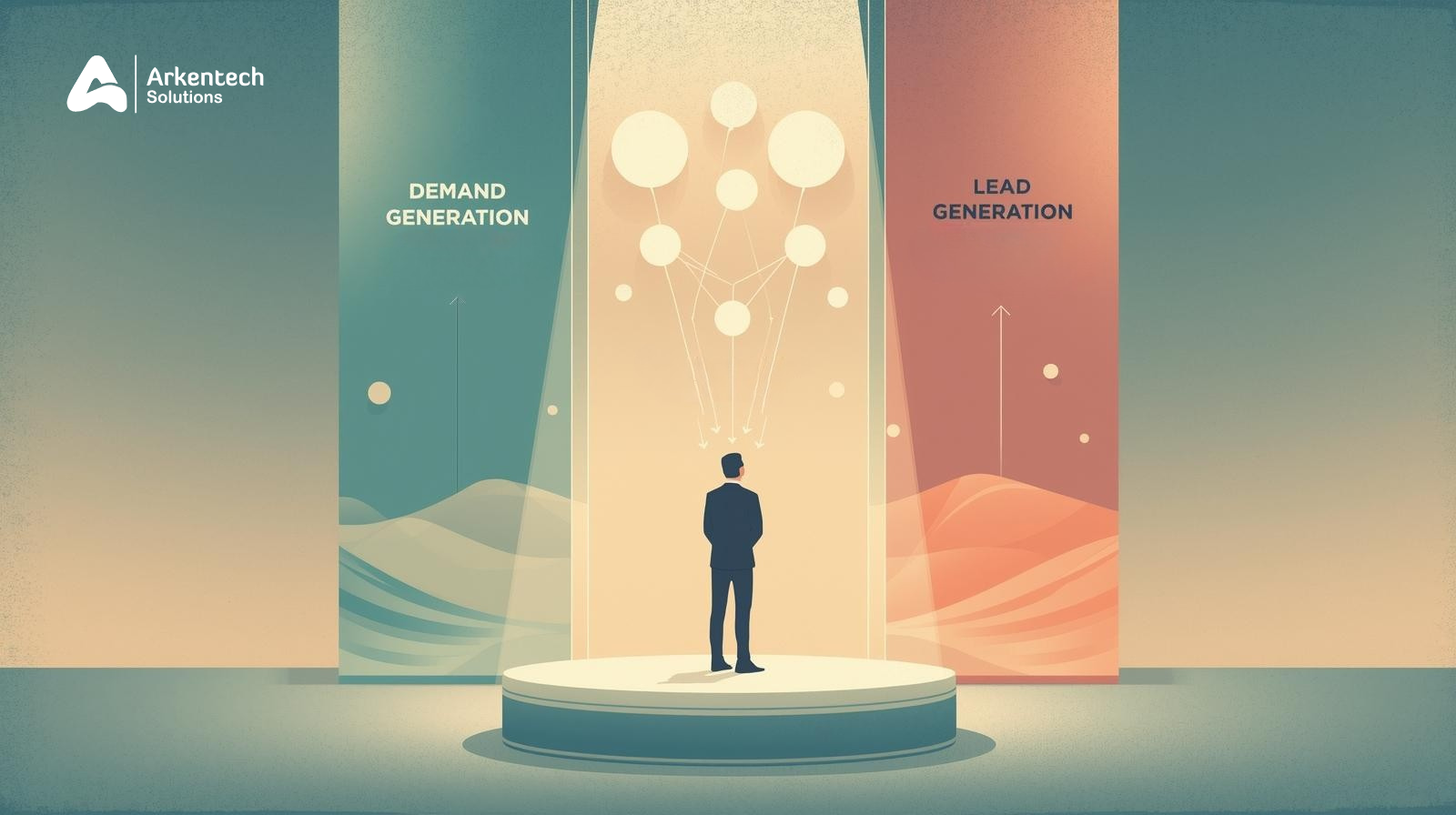
Why Lead Generation vs Demand Generation for B2B ABM Matters
Lead generation vs demand generation for B2B ABM is not just a difference in terminology. It’s a strategic mindset shift that determines whether your account-based marketing campaigns are truly influencing your business’ purchasing decisions or just driving surface-level engagement.
In traditional marketing, the main goal was to gather potential customers. But ABM changed the scenario. When targeting named business accounts, you’re not chasing volume. You make an impression in organizations. Therefore, it becomes important to understand this difference.
In ABM environments:
-
Sales cycles are longer
-
Buying committees are larger
-
Trust carries more weight than speed
-
Strategic positioning matters more than campaign frequency
-
Engagement depth is more valuable than lead count
If you misunderstand this structure, you may run active campaigns but still feel like growth is slow.
What Demand Generation Really Means in B2B ABM
Demand generation inside ABM is about preparing the ground before asking for anything. It focuses on awareness within specific target accounts, not broad market attention. Instead of asking someone to book a demo immediately, demand generation helps your brand become familiar inside the organization.
It works quietly and consistently.
Demand generation in B2B ABM typically:
-
Educates decision-makers about industry challenges
-
Builds authority within specific verticals
-
Creates internal discussions among buying committee members
-
Reduces friction during sales outreach
What Lead Generation Looks Like in B2B ABM
Lead generation in ABM activates engagement. It converts awareness into measurable actions.
But the key difference is this: in ABM, lead generation is highly selective. You are not trying to convert everyone. You are converting the right stakeholders inside selected accounts.
Lead generation in B2B ABM often includes:
-
Personalized demo invitations
-
Executive briefings
-
Strategic consultation offers
-
Custom ROI analysis sessions
-
Targeted follow-up campaigns
Lead generation becomes powerful only when demand already exists within the account. If demand is missing, lead generation feels premature.
Direct Comparison
Lead Generation vs Demand Generation for B2B ABM
To make this clearer, here is a direct comparison.
Strategic Difference Overview
| Strategic Area | Lead Generation in B2B ABM | Demand Generation in B2B ABM |
|---|---|---|
| Core Goal | Convert stakeholders into meetings | Build awareness within target accounts |
| Focus | Individual decision-makers | Entire buying committee |
| Timing | Later stage activation | Early stage influence |
| Measurement | Meetings booked, demos requested | Engagement depth, account activity |
| Impact | Immediate pipeline movement | Long-term trust and credibility |
Both strategies are important, but they operate at different stages.
The Buying Committee Factor
Enterprise buying decisions are rarely made by one person.
- A CFO may care about financial return.
- A CTO may focus on technical feasibility.
- Operations may focus on implementation.
- Procurement may focus on compliance.
If only one person converts through lead generation, but others on the account are unaware of your brand, the deal will slow down. Demand generation ensures that more stakeholders are aware of your expertise. Lead generation ensures that one of them takes action. This balance defines success in lead generation versus demand generation for B2B ABM.
Tactical Comparison
Here is how execution differs.
Tactical Execution Comparison
| Execution Area | Lead Generation | Demand Generation |
|---|---|---|
| Content Type | Offers, demos, consultations | Thought leadership, industry insights |
| Messaging Tone | Solution-driven | Problem-driven |
| Targeting | Specific stakeholder | Full account targeting |
| Short-Term Results | Higher | Lower |
| Long-Term Influence | Moderate | High |
If you use only lead generation, campaigns may feel aggressive. If you use only demand generation, growth may feel slow The key is alignment.
The Hybrid Model That Works
The most successful ABM teams do not choose between lead generation and demand generation. They layer them.
A practical sequence looks like this:
-
Identify high-value accounts
-
Launch demand generation campaigns to build awareness
-
Track engagement signals
-
Introduce personalized lead generation offers
-
Align sales outreach with engagement data
When structured this way, conversion feels natural.
In B2B ABM, demand generation builds internal influence, and lead generation converts that influence into pipeline.
The Structured ABM Flow
The Balanced ABM Model
| Stage | Focus | Expected Outcome |
|---|---|---|
| Stage 1 | Demand Generation | Awareness inside target accounts |
| Stage 2 | Multi-Stakeholder Engagement | Internal discussions begin |
| Stage 3 | Lead Generation | Meeting booked |
| Stage 4 | Sales Collaboration | Strategic conversation |
| Stage 5 | Pipeline Development | Enterprise opportunity created |
This layered approach prevents premature selling and improves deal velocity.
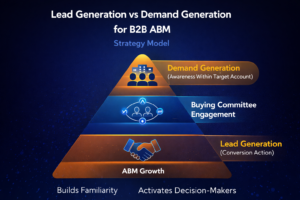
Visual Model for Your Blog
Add one infographic image showing:
- Top Layer – Demand Generation (Awareness Within Target Account)
- Middle Layer – Buying Committee Engagement
- Bottom Layer – Lead Generation (Conversion Action)
Final Thoughts
When people discuss Lead Generation vs Demand Generation for B2B ABM, it’s often treated like you have to pick one. But that’s not really how it works. Demand generation builds familiarity inside your target accounts first. It helps people recognize the problem and trust your perspective. Then lead generation steps in at the right time, giving decision-makers a clear next step. When both are used in the right order, ABM feels intentional instead of experimental.